Showing posts with label Austin Hall. Show all posts

Monday, April 13, 2015

SHSU Botanical Research- ABIII & Farrington Bldg.(SELF-GUIDED TOUR #11 & #12)

SELF-GUIDED TOUR MAP #11 & #12
FITNESS WALKING MAP -  1.5- 1.0 Mile

Once you top the hill and go around ABIII building you will run into the cannon known as Boomer.   There even is a special ROTC group called the Cannon Crew who fires one at special occasions.


Make note that across Bowers Blvd. is the Art Complex, which will be our last part of the Building and Botanical Research Tour.

Now keep walking to our last stop #12 on the Main Campus grounds to the Farrington Building.

If you go just past this sign and look on the left side of the sidewalk you will see these in ground plaques. 
 
 
Dr. Russell Palma who at the time was the Chair of the Physics department and Frank Cooper, had an idea sometime around 1992-93, to create and install stainless steel plaques that accurately represents our Solar System.  

First of the series of plaques


In the back of Austin Hall, near this statue of Sam Houston is where Pluto, the last of the plaques is located.


Time to back track a little, go back to where "Boomer" the cannon is located by ABIII building.  You will be crossing Bower Blvd. and going to the Art Complex located in the metal buildings sitting on the corner.
 
Until Next Time.


Thursday, March 19, 2015

SHSU Botanical Research- Austin Hall (Flowering Quince Tree & Bruce Fulenwider Hedge Marker) SELF-GUIDED TOUR #4


SELF-GUIDED TOUR MAP #4
FITNESS WALKING MAP - Between .05 & 1.0 Mile


Flowering Quince Tree that may be from the original root stock of the plants growing by the Houston's Woodland home on the Museum complex grounds.
Back Door of Austin Hall


Did you know we at Sam Houston State University have the bragging rights to claim our heritage of this building being the First Law School in Texas. Yes, that is right, the school was established by The Board of Trustees of Austin College, March 1855.  Is someone doubts you, just point them to this plaque by the back door.

If you look just across from the doorway and down into the hedges you can spot this marker.
 
Bruce Fullenwider is now retired as the Grounds Manager at SHSU.  He hired current Grounds Manager, Scott Dolezal 17+ years ago.


 Another school tradition, students and lovers carving their initials into the brick wall.


This statue of Sam Houston was part of the Centennial celebration, 1879-1979

Also if you look down at the ground slightly in front of  Sam's statue, you will see another plaque.
It is the plaque representing Pluto.  This is the end of a scaled representation of our Solar System.  The beginning plaque, our Sun, is at SELF-GUIDED TOUR #12 located next to the sidewalk in front of the Farrington Building.

Now would be a good time to visit the Jewel Garden.  Go to the left of this statue.  If you go right; back down the sidewalk, this path will lead to the Peabody Memorial Library.

Until Next Time.

Monday, March 16, 2015

SHSU Botanical Research- Old Main (Biennial Garden) & Tripod. SELF-GUIDED TOUR #4

SELF-GUIDED TOUR MAP #4
FITNESS WALKING MAP - Between .05 & 1.0 Mile

If you are using the Self-Guided Tour Map you will be rounding the corner and seeing Austin Hall up top of the hill.
 
 The Walking Trail in this direction will have you passing Old Main and Austin Hall.  You will be reaching Mile Marker 1.0 around the corner. 


Tripod's Headstone under a shade tree
on "College Hill"

He lived a good long life, 21 years according to his headstone
 
If you are wondering, who was Tripod?  He was the unofficial Mascot of SHSU "The Three-Legged Don Juan of College Hill."
 
According to the Newton Gresham Library podcasts, Episode 28:Jan, 3, 2008, "Tripod, as he was named by the students, loved a parade and football game.  He managed to be on the scene of all major activities.  He ate at dorms or fraternity houses.  He slept in apartments and dorms.  He never lacked for food, affection, or medical care.  He made his annual visit to the veterinarian, carried by a friend.  He always managed to have a new collar when needed."


http://www.shsu.edu/~pin_www/T@S/2001/OldMainExhibit.html


The "Old Main Pit" as this area is known is well worth the effort to explore and see what's left after the fire of the old architecture.

http://aggie-horticulture.tamu.edu/ornamentals/nativeshrubs/sophorasecund.htm


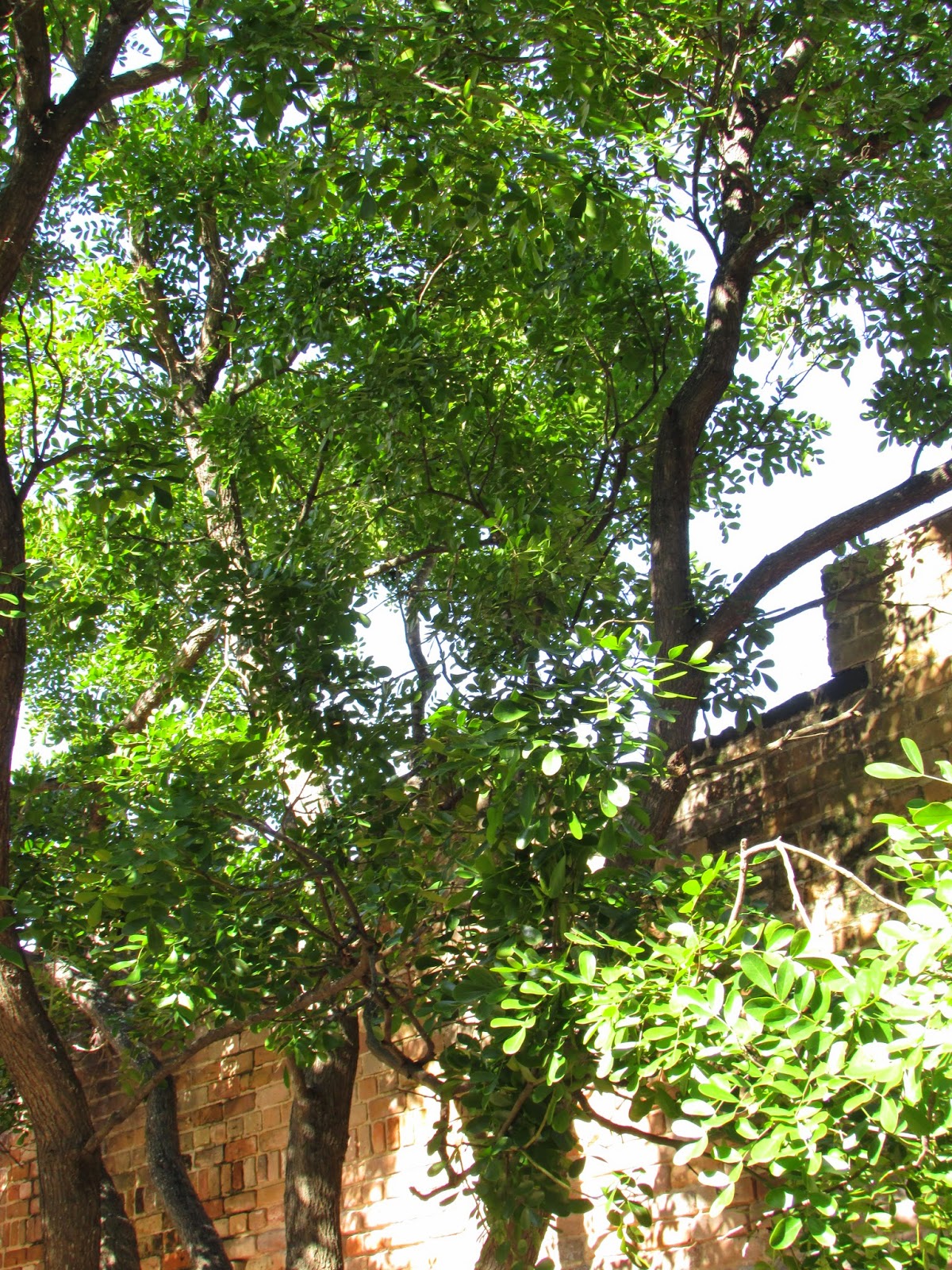
The springtime blooms of the Texas Mountain Laurel
smell like grape chewing gum.
 
According to Scott Dolezal, Manager of SHSU Grounds, this tree is 25+ years old.  The tree has grown so large it is beginning to split apart due to the weight of the branches.  He is hopeful it will survive.

 
http://www.erowid.org/library/books_online/golden_guide/g91-100.shtml
 
 
The red seeds are the Mescal Bean


The Bicentennial Garden was dedicated March 2, 1993.  The garden is now occupied with perennials such as native Lantana, and Pampas grass. Originally the newly patented Sam Houston Roses were planted there as part of the Bicentennial celebration.  Due to the fact there was too much shade in this particular section of the garden, the roses did not thrive and had to be removed.


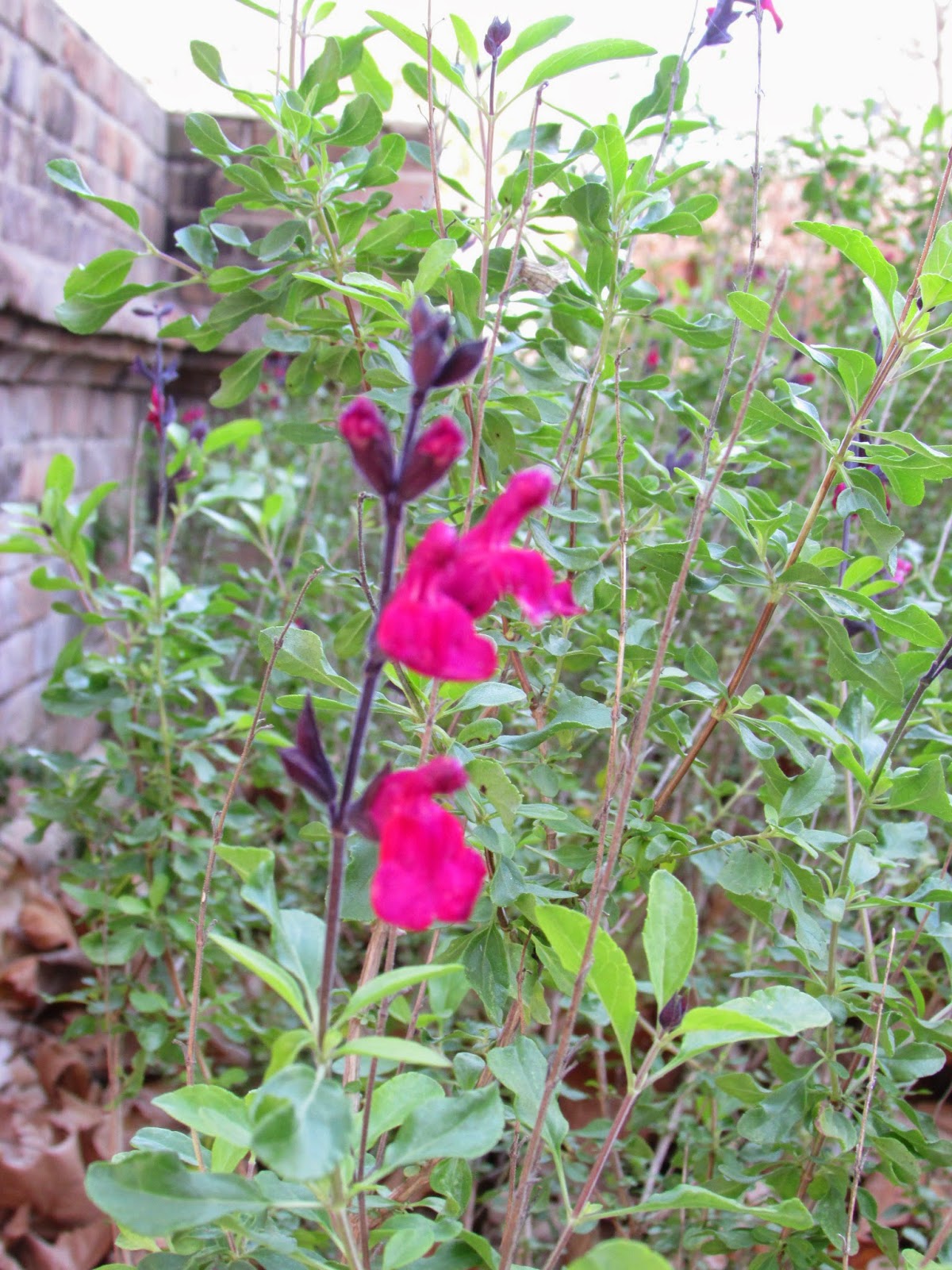
As you leave the pit area these two native plants can be found growing inside the brick wall planters leaving Old Man and leading up the walkway to Austin Hall.


Texas Red Salvia (right side)


Turk's Cap (left side)
 
Before you venture too far, this fountain donated by the Sam Houston Players, is just around the corner from Old Main.


Until Next Time.


Wednesday, March 11, 2015

SHSU Botanical Research- Jewel Garden's Magnolia Tulip Trees (-SELF GUIDED TOUR #3)

SELF-GUIDED TOUR MAP #3
FITNESS WALKING MAP - 1.0 Mile

Walking down the side street that originates with the Faculty parking by the Visitors Center, you will pass by the Student Union.


Next will be the Margaret Lea Houston Building.


If you look up atop the hill 

for a much too short period of time in early spring, you will see a row of Tulip trees blooming within the Jewel Garden, tucked in a little area just west of Austin Hall. 


   What a viewer can expect this greatly admired sight in early Spring.


Trees Dormant in Winter
http://www.buildingshsu.com/j/jewel_garden/index.html

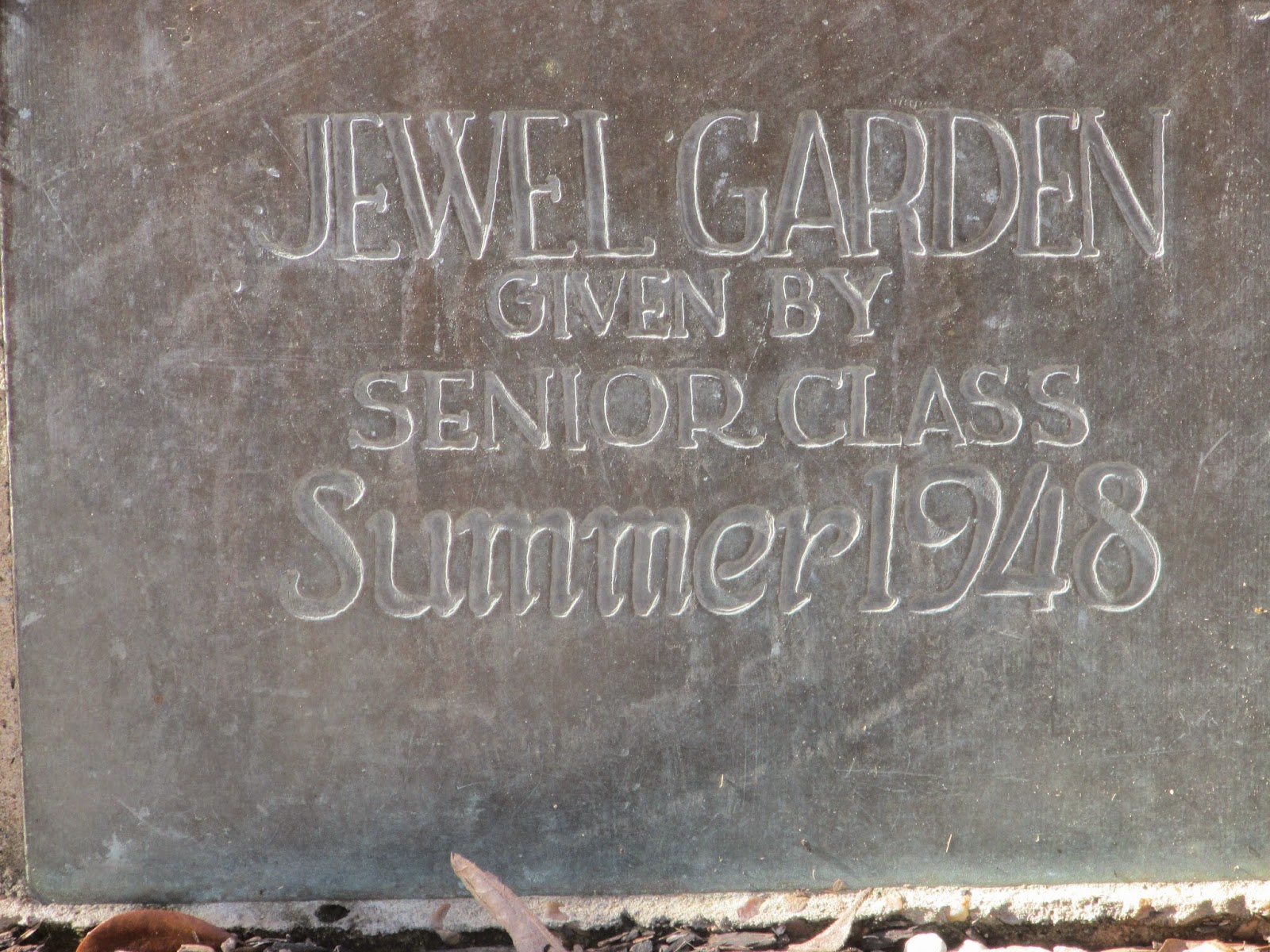
The Senior Class of 1948 presented the garden.  Grace Longino assisted with the beautification of what was originally a dangerous mud slope.  The original fountain is no longer working, but the various precious stones which lead up to the statue give the garden its' name.  The serene statue of a young, tranquil, curly headed woman was modeled after a student cheerleader, Ruth Whisenhant.


Jewel Garden precious stones and statue


This Jewel Garden bench allows one to enjoy the meditative aspects of this garden which is surrounded by Camellias, Azaleas, and Magnolia Tulip trees.

Now continue on around the corner and up the hill to SELF-GUIDED TOUR#4.
Old Main & Austin Hall.  You will be able to catch your breath shortly, after visiting these two sites.
Until Next Time.


Monday, February 23, 2015

SHSU Botanical Study- Flowering Quince Trees (Main Campus & Woodland Home)

 
I was working on my research in late December, when I spotted these beauties, which by the way bees seem to love.  Unfortunately, these blooms fall off by spring time.  So, if you are fortunate enough and happen to be walking either on the museum grounds at the Houston's Woodland home site or the campus in front of Austin Hall's entryway you may still be able to catch a fleeting glimpse of these brightly colored blooms of the flowering Quince tree. 


In front of Austin Hall

Close up of branches of trees lining sidewalk at the Woodland home

The Quince is often mistaken for the Camellia.  This variety is possibly the Orange Storm, which is an old-fashioned deciduous shrub that American farmers of the 1800's often grew on their homesteads.  These plants would be used sometimes for the little bit of fruit they produced, but mainly this tree's blooms are beautiful and can brighten any dreary day.  The blooms resemble and are often mistaken for the Camellia.

In speaking to Peter, the Museum Groundskeeper he told me of documentation about these plants.  I was able to get copies Mrs. W. A. Leigh's recollection of the grounds from her childhood and when the Houston's lived.  This is her words concerning these plants,  "On the west side of the walk, leading to garden, a short distance from the back porch there grew in a row extending almost to the garden fence, five quince trees."

So it appears these group of 5 Quince trees are still living in the same spot where Margaret Houston planted them sometime in the 1800's.  Also, one can reasonably speculate that the Quince tree growing at Austin Hall, another historically significant building in Texas history, is most likely from this same root stock.

I was able to find a internet site which had interesting ways Quince was used in England.  To read follow this link Historical Reference of the Quince Tree.

Until Next Time.